An Evening With CAKE
Hindley St Music Hall, 149 Hindley Street, 5000 Adelaide Directions
Tue 16.03.2027 19:00
CAKE make their long-awaited return to Australia for the first time in 15 years, bringing their unmistakable wit, groove and distinctive originality back to fans nationwide.
An Evening with CAKE features two full sets spanning the band’s remarkable catalogue, showcasing their genredefying brilliance. Fans can expect a set stacked with favourites, including the iconic ‘The Distance,’ ‘Short Skirt/Long Jacket,’ ‘Never There,’ ‘Frank Sinatra,’ ‘I Will Survive’ and more
"Although Australia is a distant continent for us, our memories of its wonderful audiences remain clear. We are delighted to have the opportunity to be part of that vibrant music scene once again." —Vincent DiFiore
More than three decades after forming, the group's commitment to its founding principles remains strong. Originally emerging as a somewhat antagonistic response to the prevailing trends of the era, CAKE has built a career defined by democratic decision-making, fierce independence and a sound that defies categorisation.
The band continues to operate entirely on its own terms, writing and recording in their solarpowered Sacramento studio, a facility that often generates more electricity than it consumes. Their longrunning CAKE Forest initiative has seen them give away a native tree sapling at every headline show, extending their environmental ethos far beyond the stage.
CAKE’s most recent album, Showroom of Compassion, debuted at No. 1 on the Billboard 200 and was praised by The New Yorker as "deadpan brilliance.” Seamlessly blending elements of rock, funk, country, folk and pop, CAKE continues to create music that is unmistakably unique.
The band is currently completing work on their ninth studio album, due in 2027. The forthcoming record will include "Billionaire in Space" a new song that debuted during a Texas Public Radio session
Don’t miss one of America’s most distinctive and enduring live acts.
Performers
-
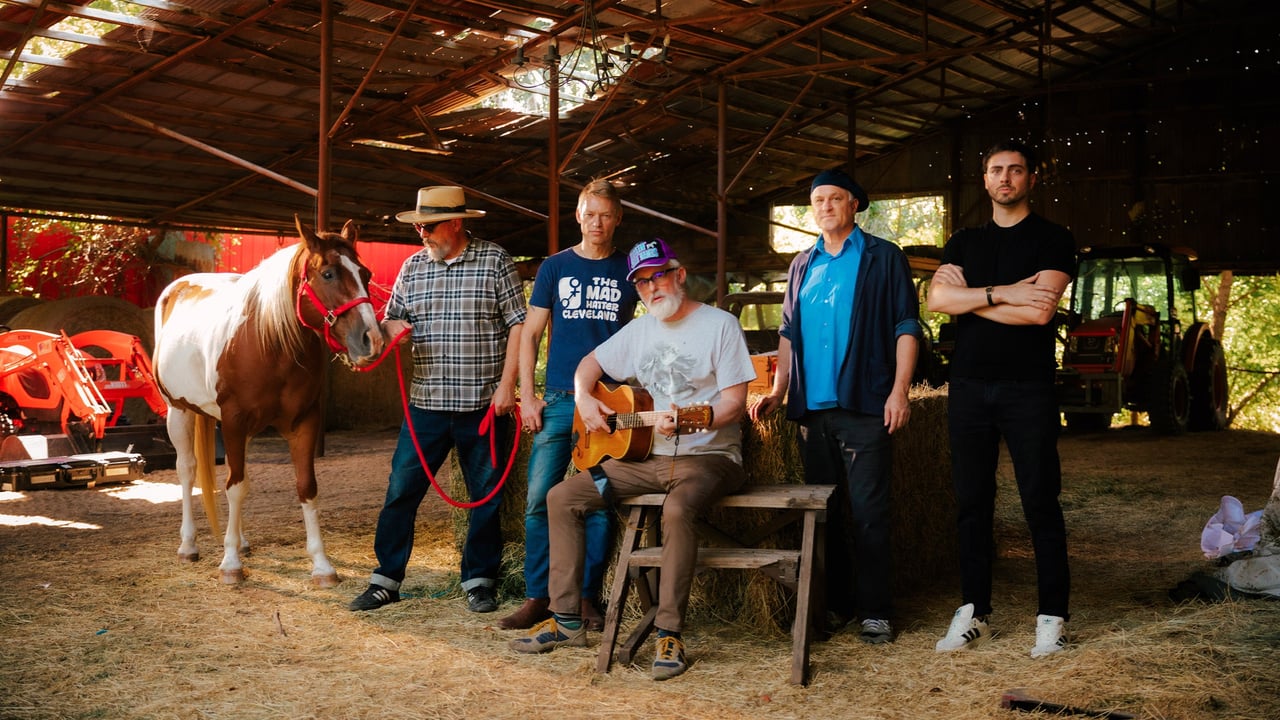
CAKE
THE CAKE STORY
Out of Northern California’s flat, dry central valley, CAKE formed in the early nineties as a somewhat antagonistic answer to grunge, which members saw as just another form of big, dumb American rock. The band intentionally made their sound as small as possible, thumbing their collective musical noses at the very idea that in the USA something so incredibly wide-load and excessive could be perceived "alternative." CAKE wondered, how could music that is the aural equivalent of Amazonian rainforest deforestation be in any way subversive? Weren't these really just the sounds of the strong overcoming the weak, Exxon overwhelming indigenous Columbians, or huge banks bribing our elected officials to rig our political system beyond all functionality? And weren't many of these supposedly groundbreaking bands just Rush or Ted Nugent in different clothing? And how could so much purported low self-esteem be broadcast so loudly, so proudly, from up on a stage no less, and with such strident rock pomp and ritual? Something just didn’t make sense. So CAKE wanted to be dinky. Dubbed "one hit wonder" in response to every single album they have ever released, within this larger cultural context, their small sound was mostly just mistaken for weakness and their embracing of non-rock sonic elements was mostly mistaken for humor. Get it? It’s not powerful, surging, straining Anglo-rock, so it must be a joke. Luckily there were a few people who understood CAKE, and for the St. Louis Dispatch CAKE’s music was "an utterly fresh sound, especially given today's preponderance of overblown "alternative" bands." And the San Francisco Bay Guardian even noticed that “CAKE doesn’t ask you to suck it’s angst.” Somehow a copy of CAKE's first demo made it all the way to France, where it was understood and well-received – “The drug dealers do not thank CAKE,” astutely observed French music magazine, Les Inrockuptibles, So true.
CAKE thrived in the unglamorous central valley of northern California, an area where country meets mariachi meets post punk and classic rock, a place where Sly and the Family Stone played on the same AM radio stations as Credence Clearwater Revival and Led Zeppelin and Chic. CAKE didn't choose sides, and felt mostly sorry for those who did. The idea of using genre as a badge seemed at its core wasteful. CAKE’s belief that “everything is useful, and no entire genre of music can be all bad” underpins their unusual sound, a sound that is hard to classify, yet somehow instantly familiar. When everything is useful, no entire genre of music can be wrong or right, and those who know who they are don't need to cling fearfully to just one thing, let alone to just one band. As a result of this basically utilitarian approach, CAKE would eventually collaborate with not only the Brazilian cultural hero Tom Ze, but also with rapper Jay-Z. Legendary country music artist, Buck Owens, even allowed CAKE to be one of the only non-country artists to play at his Crystal Palace in Bakersfield, CA. Very early on, when CAKE opened for legendary minimalist songwriter, Jonathan Richman, Jonathan pulled CAKE singer John McCrea aside and asked him when was the last time he actually enjoyed listening to live music. McCrea responded that usually it was a bit of a chore, and that his ears couldn't actually decipher that much musical information because of the super powerful volume. That's because, according to Jonathan, sound systems often create a live music experience that is too loud, too precise, and not actually viscerally enjoyable. For many years CAKE baffled sound engineers by insisting that microphones be used on vocals only – no more amplified high hats and amplifiers. Audiences, however, would frequently remark that they could actually understand the words in the songs -- this only bolstered CAKE’s growing suspicion at the time that less is usually more.
As a result of this rather scruffy and low tech approach to live performance, CAKE was forced to learn how to play to a room, how to entertain and deliver to the smallest, seediest dive bar or the largest outdoor amphitheater. Traversing the continent sometimes three or four times in a single year in a Dodge passenger van that would frequently catch fire from overuse, CAKE narrowly avoided road death many times on the icy roads of New England. Gradually audiences began to seem less puzzled, offended, or furious. Some people even began memorizing and singing along to their songs, and CAKE began to miss the days before people thought they knew who they were, and what to make of them. Their song, "Rock n Roll Lifestyle,” from their first self-released album, Motorcade of Generosity, became a minor college radio hit. Eventually, they signed a deal with Phil Walden and Capricorn Records, which led to some actual worldwide distribution and success. The days of plastering up to telephone polls their own enigmatic band-designed posters and befuddling iconic artwork were soon ending.
In 1996 CAKE released their Fashion Nugget album, with "the Distance" and "I Will Survive" breaking through into all kinds of people's homes, rich and poor, educated and uneducated. Somehow the album presented a very multi-purpose array of musical communication that rung true at that time, often even with those who were getting tired of the ponderous, self-imposed trouble music of the mid-90's.
CAKE's next album, Prolonging the Magic, saw the departure of Greg Brown, but also their most successful song, "Never There," which even charted in such far away places as Brazil and Turkey. Brown was replaced on this album by Chuck Prophet (Green On Red), Tyler Pope (!!!), Jim Campilongo, Rusty Miller (Jackpot) and Xan McCurdy (the Loved Ones). Xan McCurdy, elected to stay with CAKE permanently.
Comfort Eagle, their highest charting album, featured Xan McCurdy on guitar, and presented such favorites as "Short Skirt/Long Jacket," "Love You Madly," and "Shadow Stabbing." Alternative Press noted that "Comfort Eagle is infinitely smarter, smarmier, and catchier than Weezer's Green Album." Hmm.
CAKE's most recent studio album, Pressure Chief, was met with critical praise for its signature match of "post-new wave with smart lyrics," according to the New York Times, with the Boston Globe chiming in that "after more than a decade of inventiveness, CAKE is far from stale." Sloppily careening between various genres until lines blurred and some people thought it became a "sound," the members of CAKE have steadfastly maintained that they are simply enjoying a process. "Music that defies simple-minded pop paradigms," the Los Angeles Times explained.
With few exceptions, CAKE has never believed in gratuitous musical change based on non-musical criteria like culture, tribal assertion, or marketing. Writers looking for a simple story or singular trajectory often criticized CAKE for not reinventing their entire sound with every new album product. For CAKE this quest for narrative always seemed wasteful, and not about the individual song as the entity of primary importance. But for many, this lack of singular narrative didn't matter because CAKE usually found more variance from song to song within the context of just one album than many bands find in an entire career. And although CAKE may seem resistant to overt change and difficult to write about, their dedication to the individual song hasn’t gone completely unnoticed. "A small number of bands can claim an actual catalog of worthwhile tunes. Count CAKE in that category," observed the Oakland Tribune. Billboard magazine described CAKE as "A band that's hard to describe, but easy to listen to."
A few years back CAKE created their own sporadic, but exciting Unlimited Sunshine Tour, which held true to their more or less anti-genre, music-first approach. In its first year audiences were surprisingly accepting of this philosophy, and the tour included such culturally incongruous performers as the Flaming Lips, De La Soul, Modest Mouse, the Hackensaw Boys, and Mexican favorite, Kinky. Later, such disparately defined acts would include Charlie Louvin, The Detroit Cobras, Cheap Trick, Tegan and Sarah, and the far out comedy of Eugene Mirman. CAKE looks forward to building another entertainingly disparate lineup for Unlimited Sunshine Tour 2011.
Much can be said or not said about CAKE's new label, Upbeat Records and their solar powered recording studio, but for CAKE it is more about independence and practicality than about being somehow "green." CAKE has always been like a "do-it-yourself" craft project -- from studio engineering, production, mixing, album art, posters, and videos, to now having their own label, recording studio, and electricity. It's all a bit more work, but in the end so much more rewarding than having to work well with others in the old music business system, where unfair advantage is always held by those with the most offices and lawyers. The fact that the new album has been produced using 100% solar generated electricity from their rooftop is merely one byproduct of CAKE's long-term quest for independence from old, sick infrastructure.